Showing posts with label technology. Show all posts

Saturday, November 03, 2018

For better and for worse

Image result for the scream


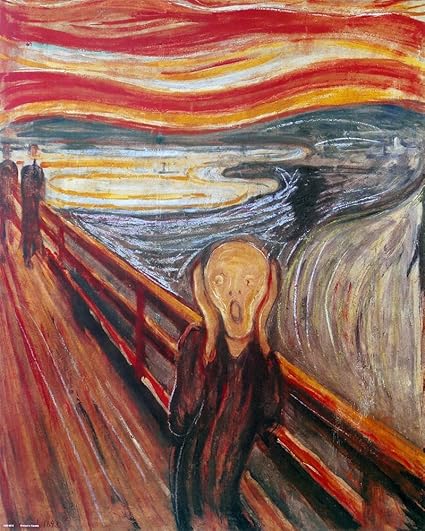
I've spent the past few weeks off of Twitter. I've done this because the never-ending stream of (usually justified) outrage made me feel kind of terrible. I found myself doing things I normally enjoyed, but would still be holding on to frustration like I'd just been in an argument in real life. 


In addition, the stuff people were most often angry about were also things I couldn't do anything about beyond a retweet or an affirmation. In other words, nothing meaningful.

All that said, Kevin Drum argues that "Social media is making the world a better place; quit griping about it". I actually agree with most of what he says, though I'd add that it's not necessarily better for people like me who were already news junkies. 

First, he makes a couple points on social media's place in the history of communication that are worth considering:
...[T]he internet boasts an immediacy that allows it to pack a bigger punch than any previous medium. But this is hardly something new. Newspapers packed a bigger punch than the gossipmonger who appeared in your village every few weeks. Radio was more powerful than newspapers. TV was more powerful than radio. And social media is more powerful than TV.
The immediacy piece of social media is something that isn't analyzed enough. We humans seem to have a cognitive bias to respond to whatever is in front of us. If that's a Facebook or Twitter feed, then that will give whatever is on the screen a sense of urgency that 99 times out of 100, it doesn't deserve. 


Along with the immediacy of social media, it also gives the same visual weight to viewpoints that otherwise wouldn't deserve it. A random blogger wouldn't otherwise merit the same consideration as, say, Jake Tapper. The upshot is that we see more of everything, including topics that we would've previously never been aware of:
...[B]roadly speaking, the world is not worse than it used to be. We simply see far more of its dark corners than we used to, and we see them in the most visceral possible way: live, in color, and with caustic commentary. Human nature being what it is, it’s hardly surprising that we end up thinking the world is getting worse.
I generally agree with Drum's point here. I don't think the world is more racist or hateful than it used to be — a visit to the Holocaust Museum or the National Civil Rights Museum should disabuse anyone of that notion — but fringe viewpoints now get exposure that didn't happen nearly as much 20 years ago.

What is new and frightening is the role that Fox News (and a couple of related websites) play in echoing, legitimizing, and amplifying conspiracy theories and thinly veiled racism. They have monetized feeding the dark corners of human nature at a scale we haven't seen before. The idea of a major TV news network devoting their prime-time lineup to content that would make the editors of Pravda blush would've been unheard of a few decades ago when Walter Cronkite was the biggest gatekeeper of TV news.

Drum makes an interesting argument that there is some benefit to the "more exposure for everything" era we are in:
Instead, though, consider a different possibility: the world is roughly the same as it’s always been, but we see the bad parts more frequently and more intensely than ever before. What has that produced? 
Well, sure, it helped produce Donald Trump. There’s a downside to everything. But what it’s also produced is far more awareness of all those dark corners of the world. And while that may be depressing as hell, that awareness in turn has produced #MeToo. It’s produced #BlackLivesMatter. It’s produced a rebellion among the young. It’s produced the #Resistance. It’s produced more awareness of extreme weather events. It’s produced an entire genre of journalism, the health care horror story, that in turn has produced a growing acceptance that we need something better.
I could go on, but the point I want to make is simple: if you want to make things better, you first have to convince people that something bad is happening. 
I again mostly agree with his point, though it's awfully depressing to be reminded that we humans pretty much always need a crisis to spur real action. But his point about the world being more or less as great and terrible as it has always been rings true. 

The context we live in has changed a great deal, but I don't think human nature is all that different. For better and for worse.

Saturday, February 25, 2017

Back at it and quickly iterating

My follow through hasn't been great. I wanted to write at least three or four times a week once school returned to its regular schedule. That, obviously, hasn't happened. 

However, I suppose the corollary to "don't let perfect be the enemy of the good" is also to not let a temporary setback become a permanent failure. 

With that spirit, a few things that have been bouncing around my head:

* One of the more interesting ed ideas I've heard is from Matt Candler of 4.0 Schools. The theory is to push new ideas is in schools by creating a quick prototype at small scale, gathering feedback, then iterating quickly. 

In the podcast "The Leaders' Table," Matt points out a flaw in the mindset of many folks who work in the high-performing charter schools world. We want to come up with the perfect (and massive plan), then roll out an idea at scale. 

As a veteran of starting new grades six times, I can advise that this never works out. (Something about "the best laid schemes o' mice and men...") Inevitably, iteration happens but the lag time is, at best, weeks. More often, it's school year to school year. 

Matt argues that we'd all better off by getting an idea to the minimum level needed to make it live, then beta testing with a short window and small group of students and/or teachers. 

* In light of this, I've been thinking about the teacher's role in running a class so that students are mentally carrying the weight of the content. Another way of thinking about is moving from seeing teaching as something that is done to students; instead, a teacher works with students.

This, obviously, is not the easiest thing to pull off. The major barriers I face can be distilled to 1) I, as the teacher, have more content knowledge than the students and 2) creating strong enough cultural norms in class so that all students fully own their learning. 

Curating various social studies resources and savvy use of students' Chromebooks has alleviated issues around #1 so that I can see the proverbial light at the end of the tunnel. 

The second concern is more vexing. The students for whom this more self-guided learning functions best also tend to be strong readers and already have great grades. I note that students who are struggling readers and/or struggle with motivation at school can fall further behind compared to their experience in a tightly-run teacher centered class.

As a way to address this, I've been testing the optimal balance of using fluency tools like Quizlet versus games like Kahoot versus direct teaching. 

Here's what I've found so far:

- Mastering the terminology of a unit feels slow at first, then pays off in the last weeks of a unit. I now have students start a unit by spending 3 minutes of class per day in the first week doing Quizlet flashcards individually. 

- In the second week, I start using games like Kahoot. The best questions are at the "stamping the learning level" -- i.e. "What" and "Who" and "How" questions. 

- Direct teaching is best for connecting thematic elements of the unit. As shown by my exit ticket data, students absorb direct teaching better in weeks two and three of a unit. Spending much time on thematic elements in the first few days of a unit seems to be relatively unproductive versus having students build their knowledge base. 

If I were teaching a language, the equivalent would be heavy focus on mastering vocabulary, then moving verb tense and sentence structure only after a base of 100 commonly used words is built. 

The class still feels too teacher-centered. I'd love to figure out a way for students to have higher-quality interactions with the materials earlier. This could look as simple as analytical conversations in a turn-and-talk, then building to a short piece of analytical writing. 

However, I've seen that doing this too early just causes the students to parrot whatever I directly taught or just offer a recitation of various facts they've picked up. 


Wednesday, January 30, 2013

Way to go, Matt!

Friend of the blog Matt Rubinstein and company have raised seven figures:
Local education technology company LiveSchool has raised $1.65 million through an equity offering, according to a filing with the Securities and Exchange Commission. 
The Nashville Capital Network led the round of funding. 
LiveSchool offers a classroom management app to help teachers manage day-to-day classroom activities, such as tracking student behavior, contacting parents or issuing hall passes.
The charter school where I work has helped LiveSchool pilot this app. (Note: some other schools in our network use student management systems from other companies.) Several other charter schools in Nashville were also involved in the beta testing of LiveSchool. I'm not sure if the company has any client schools in the district, though I'm sure that will eventually come, if it hasn't happened already. 

Apps like this one that improve the flow of record-keeping and paperwork -- particularly in essential but mundane tasks like tracking demerits and hall passes -- make a big difference in managing a school. Student management systems aren't the type of reform that will be debated by the Tennessee legislature, but this is the type of nuts-and-bolts change that makes a difference in teaching kids. When data is more accessible, consistent, and easily visualized, teachers can do their jobs better.


Matt is a smart guy and I hope this money helps the company refine the product and grow. It would be great if Nashville become not only a hub for innovative schools, but innovative educational technology, too. 


Note: neither I nor the network of schools where I work are formally endorsing LiveSchool. Just proud to see a cool business launch in Nashville.