Showing posts with label importance of cultural norms. Show all posts

Saturday, November 03, 2018

For better and for worse

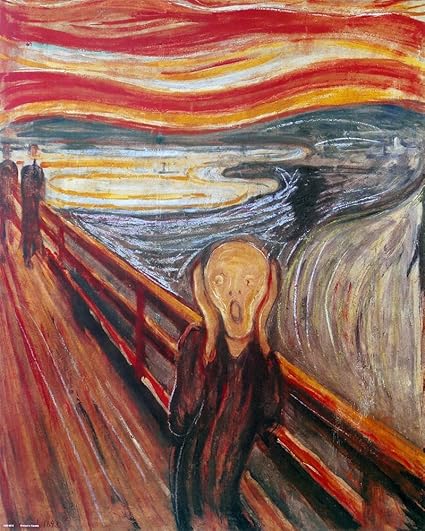
Image result for the scream


I've spent the past few weeks off of Twitter. I've done this because the never-ending stream of (usually justified) outrage made me feel kind of terrible. I found myself doing things I normally enjoyed, but would still be holding on to frustration like I'd just been in an argument in real life. 


In addition, the stuff people were most often angry about were also things I couldn't do anything about beyond a retweet or an affirmation. In other words, nothing meaningful.

All that said, Kevin Drum argues that "Social media is making the world a better place; quit griping about it". I actually agree with most of what he says, though I'd add that it's not necessarily better for people like me who were already news junkies. 

First, he makes a couple points on social media's place in the history of communication that are worth considering:
...[T]he internet boasts an immediacy that allows it to pack a bigger punch than any previous medium. But this is hardly something new. Newspapers packed a bigger punch than the gossipmonger who appeared in your village every few weeks. Radio was more powerful than newspapers. TV was more powerful than radio. And social media is more powerful than TV.
The immediacy piece of social media is something that isn't analyzed enough. We humans seem to have a cognitive bias to respond to whatever is in front of us. If that's a Facebook or Twitter feed, then that will give whatever is on the screen a sense of urgency that 99 times out of 100, it doesn't deserve. 


Along with the immediacy of social media, it also gives the same visual weight to viewpoints that otherwise wouldn't deserve it. A random blogger wouldn't otherwise merit the same consideration as, say, Jake Tapper. The upshot is that we see more of everything, including topics that we would've previously never been aware of:
...[B]roadly speaking, the world is not worse than it used to be. We simply see far more of its dark corners than we used to, and we see them in the most visceral possible way: live, in color, and with caustic commentary. Human nature being what it is, it’s hardly surprising that we end up thinking the world is getting worse.
I generally agree with Drum's point here. I don't think the world is more racist or hateful than it used to be — a visit to the Holocaust Museum or the National Civil Rights Museum should disabuse anyone of that notion — but fringe viewpoints now get exposure that didn't happen nearly as much 20 years ago.

What is new and frightening is the role that Fox News (and a couple of related websites) play in echoing, legitimizing, and amplifying conspiracy theories and thinly veiled racism. They have monetized feeding the dark corners of human nature at a scale we haven't seen before. The idea of a major TV news network devoting their prime-time lineup to content that would make the editors of Pravda blush would've been unheard of a few decades ago when Walter Cronkite was the biggest gatekeeper of TV news.

Drum makes an interesting argument that there is some benefit to the "more exposure for everything" era we are in:
Instead, though, consider a different possibility: the world is roughly the same as it’s always been, but we see the bad parts more frequently and more intensely than ever before. What has that produced? 
Well, sure, it helped produce Donald Trump. There’s a downside to everything. But what it’s also produced is far more awareness of all those dark corners of the world. And while that may be depressing as hell, that awareness in turn has produced #MeToo. It’s produced #BlackLivesMatter. It’s produced a rebellion among the young. It’s produced the #Resistance. It’s produced more awareness of extreme weather events. It’s produced an entire genre of journalism, the health care horror story, that in turn has produced a growing acceptance that we need something better.
I could go on, but the point I want to make is simple: if you want to make things better, you first have to convince people that something bad is happening. 
I again mostly agree with his point, though it's awfully depressing to be reminded that we humans pretty much always need a crisis to spur real action. But his point about the world being more or less as great and terrible as it has always been rings true. 

The context we live in has changed a great deal, but I don't think human nature is all that different. For better and for worse.

Monday, August 27, 2018

You can't just order people around (Well, you can, but it's surprisingly ineffective)


Image result for milgram experiment
The Milgram experiments

A few days ago, I listened to Radiolab's podcast "The Bad Show." It explored bad behavior in a couple of different ways. The segment that stuck with me was their take on the famous Milgram experiments on the lengths people will go to follow directions. 


First, the context. An fake experiment on using electric shocks as a motivator for learning is staged. A regular citizen is brought and instructed by an administrator to give increasingly high shocks to a "learner" (actually a voice actor on a recording) if that person incorrectly answers parts of a memorization exercise. The "learner" purposefully starts making mistakes, forcing the regular citizen to decide to administer the shocks.  

The real experiment is to see when the person administering the shocks stops the experiments. That person is forced to hear the "learner" scream in pain and beg to stop. Labels on the "machine" show that the person is administering deadly shocks to the learner. 

Image result for milgram experiment


The experiments were spurred by examining the idea: "How could so many German citizens be cogs in the Final Solution?" Nowadays, the experiments have been applied to subsequent genocides and also cover territory like: "How could so many Enron employees participate in a massive fraud?" 

The headline of the experiment is that a disturbingly high percentage of people will basically do what they're told by a person in authority -- or even one who looks like she or he is in authority. 

Milgram conducted dozens of variations of the experiment. Did it make a different in what the "administrator" was wearing? What about the age of the person giving instructions? What happens if the administrator gives rationale? What about if the administrator issues an order? What "The Bad Show" discusses are two important, oft-overlooked subtleties in the findings: 

1) What got the highest rates of compliance was when the administrator justified the experiment in terms of contributing the greater good. If the citizens thought they were doing their part to advance the science of learning, around two-thirds of them were willing to shock the learner enough to kill them. 

2) Giving direct orders was the least successful way of gaining compliance in killing people. About two-thirds of all citizens rebelled when giving a direct order to keep sending deadly shocks. 

***

The implications of these results are exciting and horrifying. One could take them in a dozen different directions. For example, I couldn't help but see echoes of them in the Maryland football scandal where a coach inadvertantly ordered a player to exercise himself to death.

For today though, I want to focus on way the experiments' implications could be used in a positive way -- managing people, specifically students. (Writing this blog has a way of quickly exposing the limits of my lived experience.) In a way, me learning how to lead a classroom more or less confirmed Milgram's results.

When I was a rookie teacher, one of the benchmarks that I set for myself was being able to give an behavior instruction with no rationale and get compliance from the students. An order, basically. 

I'm not sure how or why I got in my head that being able to order kids around was a mark of a teacher with a well-managed classroom. Then again, a lot of my ideas back then of what made for a good teaching were 100 percent wrong. 
I was always able to get a few to comply, but enough would rebel that in short order the lesson would go off the rails.

I never got to the point of being able to consistently, successfully order kids around. This is because as I got better at my job, I realized I didn't need to do it. 

It's sort of similar to the famous photo of cyclists smoking cigarettes while riding in the first few Tour de Frances. Turns out smoking cigarettes is counter-productive if one is riding 100 miles a day! Also counter-productive: barking orders at adolescents. 


Image result for tour de france smoking cigarettes
Not a successful racing strategy

What I learned from much better teachers is that well-managed classrooms have a rationale -- implicit or explicit -- for everything that happens in executing a lesson. The teacher has set things up so the class doesn't need to rely solely on the authority of an adult for it to function. This creates a virtuous cycle where the teacher can achieve maximum compliance with a light touch. The students trust the teacher's direction, therefore the teacher can do all sorts of other things -- give suggestions, solicit peer feedback, restating rationale, clarifying or simplifying directions  -- instead of issuing a series of orders (with explicit or implicit negative consequences) to achieve the day's goal. 


Great leaders get the behavior they want by investing people in a clear vision, giving simple directions, depending more on persuasion than authority, and setting up strong systems to create a culture where people want to be best their best selves. If you observe one of these classes (or team or working groups), then you'll notice something interesting when there's off-task behavior. The person or people doing the non-compliant behaviors quickly give up because it's exhausting -- like swimming against the tide. 


Thanks to Milgram, we better understand the power -- for good and for ill -- of investing people in a grand vision. The experiments showed that we are hard-wired to follow directions more often than not when we believe we a part of something big and great. It also illustrates the power and perils of being the person in charge. These are morally neutral observations. 

What is up to us is our awareness of what we're asked to do and conversely, what we're asking of others when we lead.

The difference between knowing we humans have a tendency versus treating behavior as fait accompli is what makes a moral choice so hard in the first place.

Monday, July 30, 2018

The slow progress of bad decisions or 'Who risks their half-a-million-dollar-a-year job for $70,000?'

The guy on the left probably isn't evil, but this is not a good look

Despite what movies and cop procedural TV shows would have us think, I don't believe most people who do terrible things are intrinsically evil. Sure, the Stephen Millers of the world exist, but he's an exception. (Even real jerks don't usually make speeches to their high schools arguing kids should be slobs because the school's janitors can clean up after them.)  A good chunk of people in positions of power believe on, some level, they're doing good, or at least, they're not actively evil. 

That's why I was fascinated a by Planet Money episode that profiled a white-collar convicted felon. The cumulative effect of the episode is more like a dark comedy than a business podcast. Then again, this isn't a new feeling since most serious news these days plays like Dr. Strangelove.
LONDON: The people back in the studio on TV after this - they were talking about it. Like, who risks their half-a-million-dollar-a-year job for $70,000 
KESTENBAUM: Scott says his friends asked him that, too. And he does not have a great answer. He can't say exactly why he did it. I asked, was it exciting? Was the thrill part of it? 
LONDON: No - wasn't exciting at all. 
GOLDSTEIN: Was he trying to get his friend to like him more? Is that what was going on? 
LONDON: No. That didn't ever pass through my mind. 
KESTENBAUM: Scott says he was kind of overworked and unhappy with his job, so everything felt a little less important. Maybe that had something to do with it. But he says crossing over that line was somehow just not as hard as it should've been. 
GOLDSTEIN: Scott says what he did was just dumb. He says that. But he says, you know, as best as he can figure out, as best as he can reconstruct, he did it to help out his friend. And he says he didn't think they were going to get caught.
What struck me about Scott London's story was the ease of making increasingly bad choices. Of course, people make ruinous choices all the time and often for reasons as banal as what London describes in the interview with journalists David Kestenbaum and Jacob Goldstein. In this case, London's choices led to criminal behavior, a guilty plea, and jail time. 

***

Some backstory: London was a CPA and partner at the giant firm, KPMG. He led teams that conducted massive audits of Fortune 500 companies. As he said, he made more than $500,000 a year. But he had a friend in the wholesale jewelry business who was struggling. It was during the 2008 recession and his friend asked him for a favor - can you tip some stock info to me? He proposed trades in the five figures, a small amount considering the tidal wave of money moving through stock markets.
LONDON: You know, it's a battle. The simple version of the one side is that I knew it was wrong. It was stupid. And then the other side is, all right, well, he's a good friend. I trust him. You know, if you are trading, and, you know, you're only going to make 10 or $15,000, who's going to know?
The answer to that last question? The feds. (The picture above was taken by FBI agents.) He was arrested in one of those 6 a.m. knocks federal agents pull. London didn't fight the charges, but he also didn't fully understand the ramifications of his actions. 
KESTENBAUM: It got worse. Scott got a lawyer. And one day, they were on their way to court in the lawyer's car. Scott's reading the news on his phone, and he sees this story about his case that has something he says he didn't know. His friend Bryan hadn't been just making small trades for a few thousand dollars. The story says Bryan had been placing much bigger trades, says he made $1.27 million. 
LONDON: And I almost threw up right there in the car. And I actually told my attorney, you got to pull over. He was driving. But I just - you know, I was just fearful that I was just going to lose it right there. So I just couldn't believe it. And once I saw that, I said, holy hell. This is - you know, this is obviously going to be a lot worse.
One would think a top-tier CPA, an expert in fiscal compliance, wouldn't need a reminder that a stock tip can used as easily for million-dollar trades as $10,000 ones. Greed is a funny thing, though. What we assume about others' decisions involving the seven deadly sins is usually wrong. 


***

I'm fascinated in a "can't look away from a car wreck" sort of way by the ostensibly well-off, competent people who've humiliated themselves working for this White House. Sean Spicer, for example, had a decent career as a press flack for Congress, then the RNC before becoming a punchline. Rex Tillerson ran the 10th-largest company in the world and then was fired while taking a call on the toilet. (Side note: Who answers the phone on the toilet?)

It's not hard to see similarities between London and the retinue of folks who've sold their soul for a nominally prestigious position. Take John Bolton, the national security advisor. This is a guy who's made his name pushing U.S military intervention is most every world conflict since Reagan was in office. (A short list of countries he's wanted to bomb: North Korea, Iran, Syria, Russia, Iraq two different times.) 


Note how quickly Bolton reversed himself on a fundamental view. I wonder if he even acknowledges the switch to himself. In a way, I thought of Scott London when I read that tweet. Both guys made decisions that seem counter to everything they've done up to that point. 

I'm not sure Bolton (or Spicer or Tillerson) could articulate the rationale for the series of choices they led them to hypocrisy and humiliation. But they -- educated and ambitious men, all -- did what they did. 

It's a bleak comedy, sure, but since we have the live their consequences, there's not much for the rest of us to laugh at.

Except for Paul Manafort -- I will be laughing all week at that crook getting methodically destroyed in a federal courthouse.

***

Update on John Bolton's continuing humiliation:


Wednesday, July 11, 2018

What should we do about the Supreme Court itself?

Image result for zooming out
A wide lens changes perspective
Framing

I'm returning to Amanda Ripley's fantastic article "Complicating the Narrative" about applying professional mediation techniques to writing about conflict in our society. Her first recommendation was to listen to a person, then amplify the contradictions in an answer as a way to tease out nuance. Then, as a person explains more, there's a greater opportunity for common ground.


The second recommendation -- adopt a wider lens -- is useful when you've hit a roadblock in a conflict. The purpose is to "start a bigger conversation," as Ripley writes:
Decades of research have shown that when journalists widen the lens [...] the public reacts differently. Starting in the 1990s, Stanford political science professor Shanto Iyengar exposed people to two kinds of TV news stories: wider-lens stories (which he called “thematic” and which focused on broader trends or systemic issues — like, say, the causes of poverty) and narrow-lens stories (which he labeled “episodic” and which focused on one individual or event — say, for example, one welfare mother or homeless man).

Again and again, people who watched the narrow-lens stories on the welfare mother were more likely to blame individuals for poverty afterwards — even if the story of the welfare mother was compassionately rendered. By contrast, people who saw the wider-lens stories were more likely to blame government and society for the problems of poverty. The wider the lens, the wider the blame, in other words.
Which brings us to the recent nomination of Brett Kavanaugh to the Supreme Court. Mimicking how Mitch McConnell and company treated Obama nominee Merrick Garland, several senators announced their opposition before Trump announced the the pick, citing a corrupt process. It's fait accompli that nearly all Democratic senators will vote against the nomination. 

In short, conflict over Kavanaugh's nomination isn't going to lead us anywhere productive. It's now an exercise in raw power politics

We can and should debate the specifics of the nomination. We'll likely have more interesting information in a couple of weeks. For now, let's consider what the Supreme Court could be. 

***
Context
From The Week

First, s
ome factors that got us here:
  • This caused presidents of both parties to use executive orders and executive branch rule-making process to enact more policy. 
  • This means courts are playing an ever-more important role in deciding how far the president and regulatory agencies can go in enacting policy. This has massive implications for both conservatives and liberals.
  • The Supreme Court is one of the few places in the American system where issues can be decided with a sense of finality. This increases the stakes even more.
  • The Supreme Court is, by design, not a very democratic (note the small-d) institution. That's not necessarily a bad thing. The purpose of lifetime appointments was to insulate its members from the pressures of elections and politicians. 
  • Medical advances like vaccines, antibiotics, and various cancer treatments (among hundreds of others) have made the average lifespan of a highly educated American to be much longer than Founders could've imagined. (Life was a little more capricious in the late 1700s.)
  • As Republicans have lost the popular vote more often**, they've depended on anti-democratic (again, note the small-d) measures to maintain power. This includes maximizing the number of conservatives in the judiciary, while curtailing the number of judges nominated by Obama. In addition, conservatives built a massive legal infrastructure since the founding of the Federalist Society in 1982 to ensure the farm system always has enough depth.

** George W. Bush's 2004 campaign is the only time the GOP won the popular presidential vote in 30 years. Separately, Democrats in the Senate have consistently gotten more overall votes, but because of the structure of the Senate, control has shifted back and forth between the parties. Republicans and Democrats in the House have alternated winning the overall vote total the past few elections.


***
Widening the Lens

We are at an unhealthy point for our democracy (for this and a lot of other reasons).  The pressures on the high court increases the likelihood it could lose the trust of the public. Too much is riding on 1) the power held by a small number of lifetime appointees, 2) the physical and mental health of nine people, and 3) the arbitrariness by which presidents get to make appointments. It's possible Trump could make two or three more appointments and the 46th president may not have the chance to make any. Finally, the political norms that governed appointments for most of the 20th century are no longer operable. 

Here's an idea: a Constitutional amendment making the following modifications to the judicial branch:
  • All federal judges -- district, appeals, and Supreme Court -- serve 15-year appointments. This would end the morbid watch for septuagenarian or octogenarian judges to retire or die. This would also encourage appointing judges in the prime of their careers rather than handing a Supreme Court seat to the youngest plausible jurist. This could also lessen the stakes of potential battles if a justice became senile, but refused to step down.
  • Judicial appointments should be on a cycle so that equal numbers of seats are up per year. Each president would get to appoint two Supreme Court justices per four-year presidential term. Voters get a realistic expectation of how much to weigh judicial nominations when deciding on a presidential candidate.
  • Each presidential judicial nominee is guaranteed an up-or-down vote in the Senate within six months of her or his nomination or the nominee is automatically appointed to the seat. No filibusters. 
***


Image result for supreme court equal justice under law
Top of the U.S. Supreme Court

This is less about advocating for a specific set of solutions and more about people thinking what our Supreme Court should be. That's a discussion that could ultimately defuse some of the tensions around both the appointment process as well as the high court's decisions themselves. It's always going to matter, but it shouldn't feel like political Armageddon every time a justice retires or dies.


What say you? Leave a comment here or on Twitter or Facebook. 

Friday, July 06, 2018

'When people show you who they are, believe them.'


Maya Angelou famously said, "When people show you who are they are, believe them." We need to keep that in mind because the news of child separation at the border is a few weeks old. There's a tendency to forget the mendacity and cruelty.

A timeline:


* The Trump administration, spearheaded by Attorney General Jeff Sessions and senior White House aide Stephen Miller (a former Sessions aide), implemented a policy of forced separation for all immigrants showing up at the southern border, including those seeking asylum, an internationally protected right.


* After being picked up by border patrol, children were forcibly separated from their parents because their parents were accused of, at worst, a misdemeanor crime. (Note: seeking asylum is not a crime. It is protected by treaty, ratified into the U.S. law by the Senate.) Children and parents were incarcerated in separate locations. In no other context does this happen in America. 


* A federal judge ordered the government to reunite the families within a given time period. Note how the judge lays waste the Trump administration's actions:

The government readily keeps track of personal property of detainees in criminal and immigration proceedings. Money, important documents, and automobiles, to name a few, are routinely catalogued, stored, tracked and produced upon a detainees' release, at all levels—state and federal, citizen and alien. Yet, the government has no system in place to keep track of, provide effective communication with, and promptly produce alien children. The unfortunate reality is that under the present system migrant children are not accounted for with the same efficiency and accuracy as property. Certainly, that cannot satisfy the requirements of due process.

The facts set forth before the Court portray reactive governance -- responses to address a chaotic circumstance of the Government's own making. They belie measured and ordered governance, which is central to the concept of due process enshrined in our Constitution.
* After mass outcry, President Trump signed an executive order to reunite the families and jail the entire family together. By ordering to detain the families indefinitely, the government is violating a different court order

* For the overwhelming amount of cases, reuniting families hasn't happened. The federal government hasn't tracked which children and parents are connected. From the NYT:

...In hundreds of cases, Customs agents deleted the initial records in which parents and children were listed together as a family with a “family identification number,” according to two officials at the Department of Homeland Security, who spoke on the condition of anonymity because they were not authorized to discuss the process.

As a result, the parents and children appeared in federal computers to have no connection to one another.

“That was the big problem. We weren’t able to see that information,” said one of the officials, who is directly involved in the reunification process.

Yet, I've run across a couple of folks (in conversations or on Twitter/Facebook) claiming that the executive order solved the family separation issue. Two things to remember:


1. It did not. See above.

2. Assume for the sake of an argument that it did. Administration officials showed what they are willing to do. Namely, take children away from their parents. 

I don't care what sort of policy end one wants to achieve. If part of the solution involves forcibly taking children away from their parents and not tracking where they go, then the people doing this are committing an evil act. The policy goal is irrelevant. 


Think of this a different way: If I robbed a bank, but gave the money back, the FBI would not forgive and forget. 


One other thing: there's a temptation to put the blame entirely on Trump. That's not quite right. It lets too many people abdicate responsibility. To implement a policy like this takes cooperation from people up and down the federal government hierarchy. Remember the actions Sessions, Miller, and the officers who did things like not even bathe toddlers: 


The people separating children from families have shown us who they are. We should never forget.

***
Update (7/6/18, 4:35 p.m.)


***

Yesterday I wrote about how we have multiple views on pretty much every issue. That's true here, too. Even though, I've written quite a bit about immigration and my positions are clear, I can think of some criticisms and conflicting views. 


The nature of these posts is they tend to be strident in one direction. It's worth noting that I believe proper enforcement is necessary. Having a humane and useful immigration system and also improving public safety shouldn't be competing interests. 


In the spirit of bringing out nuance, I'll address some common criticisms of views like mine in the near future. 

Sunday, January 21, 2018

Unalienable rights, unintended consequences, and 3D printing guns

What spurs me to write about this topic isn’t -- thankfully -- another mass shooting. (Does that mean it's a good time to talk about gun policy? Is there ever a good time?)

Rather, I listened to an unexpectedly horrifying podcast.


I get it and feel it. I understand that it is bad. But I'm already in a place - like an activist mentality - what is going to be done with this event? How is this going to be used? How is this going to be used against me? Look. I mean, that's where I am.


Let’s decode the pronouns. “This event” is Newtown. (Yes, that Newtown.) “It” is murder. The guy quoted above is Cody Wilson, who has been a driving force behind using 3D printers to make guns and gun parts.


Podcasts regularly feature some grisly crimes and terrible people. Can’t say I was expecting it from NPR’s economics podcast “Planet Money” though. Wilson was featured in the episode, “The Gun Man”.


When he learned about the murder of children, his reaction as an “activist” was to be primarily concerned with how it impacted his dream of making most any type of gun available to anyone with access to a 3D printer.


To put it kindly, Wilson comes across as the guy you hope never talks to you at a party.


Technology has empowered him -- and others like him -- in a way that likely can't be walked back. He really can make untraceable guns from widely available technology. That knowledge really has spread around the world. Short of Station Eleven-style mass regression in technology, 3D printing capabilities are only going to improve.


Sure, we’ve had weapons capable of mass destruction for a long time. It’s just before the advent of commercial assault weapons, it took some work and usually the approval of several other people to commit the sort of carnage, say, the lone Vegas gunman did. (Or the Sutherland Springs gunman. Or any of the other 307 mass shootings in the U.S. during 2017.)

Mass availability of assault weapons has given us a society where an individual can decide to end dozens of lives in a couple of seconds. Now with 3D printing, you can expect the distribution of assault weapons to hit overdrive in the near future. Pretty much anyone who wants to take a lot of lives won't be stopped by lack of tools to do so.

Side note: An important thing about those who use assault weapons professionally -- military and, in some instances, law enforcement -- is that there's a command structure. It’s odd that in some ways, our soldiers face more restrictions firing their weapons than the “Stand Your Ground” law that kept George Zimmerman out of jail.


The problem is that in our modern world, a lax approach towards anything approaching gun control coupled with ever-evolving technology means that unintended consequences -- mass murder by a deranged individual, intimidating the exercise of free speech by those who aren't armed -- comes at the expense of the “unalienable” rights to life, liberty and the pursuit of happiness.


Think about John Locke’s idea of unalienable rights: he (and later, the Founders) believed in the revolutionary idea that they weren’t granted by a king or government. Rather, these rights are given to everyone simply by the virtue of being human. The purpose of government, first and foremost, is to protect those rights.


Of course, anyone who says there's an easy policy solution for any of this is conning you. It's true that most other countries don't have issues with mass shootings because of tight gun control. However, short of waiting for generational change in the Supreme Court , it isn't happening here. (Thanks DC vs. Heller.) I’m also skeptical about most proposals regulating 3D gun printing since I don't know how it's practical to meaningfully regulate a machine that runs a computer program to shape plastic.

I worry, though, that having our gun policy effectively set by people like Cody Wilson will come at a great expense. Namely, the rights we'll see scaled back are those the Second Amendment was originally intended to protect.

Tuesday, January 16, 2018

The Devil and Tom Cotton


Trump has an odd talent for forcing everyone who supports him to make a Faustian bargain.

Take the case of Sens. David Perdue and Tom Cotton. They lied on national television Sunday, saying that Trump didn’t say “shithole countries.” This was to counter Sen. Dick Durbin confirming that Trump said “shithole countries” in the senators’ meeting with Trump on immigration. Perdue and Cotton were, not surprisingly, obfuscating. They told White House privately that they believed they heard “shithouse” -- a distinction without difference.


Imagine the thought process one must go through to deliberately mislead a nation thanks to the difference between shithole and shithouse. You wouldn’t tolerate that nonsense from a six-year-old. Certainly, black congressmen aren't missing the point:

“The words don’t matter,” Mr. Richmond (D-La.) said. “The words just cement his sentiment that the people in those countries are less worthy, and he would like people from different countries. He chose the black countries to say he didn’t want those people and one of the whitest countries to say he did want them. I think that’s telling.” 
Asked if he saw any difference between the two words, Senator Tim Scott of South Carolina, the only black Republican in the chamber, was equally dismissive: “No,” he said.


Trump’s mendacity is well known. What is more telling at this point is what is revealed about Perdue and Cotton. To wit: they are moral weaklings. They've now shown they will lie at the slightest convenience. They will cover for the sort of racism that is far more consequential the “locker room talk” it’s written off as because lowbrow banter rarely comes with the stakes of 800,000 people having their lives turned upside down.


Trump has been cruel and racist for a long time. (I find his bit part in the case of now-exonerated Central Park Five particularly nasty and telling.) What changed is we can now confirm that Perdue and Cotton are much the same way. To paraphrase football coach Denny Green, they are who we thought they were.

They aren’t the only ones. Paul Manafort, Anthony Scaramucci, Kellyanne Conway, and Sean Hannity are just a few of the many who made ridiculous statements, lied, and, in some cases, committed crimes because of Trump. They who didn’t merely sacrifice their dignity on Trump’s behalf -- they’ve shown they never had any in the first place.

The lesson of Faust is not just that making a deal with the devil costs you your soul. It's also that the pursuit is poison in itself.

Note to Cotton, Perdue, and their ilk: the kicker of every Faustian bargain is the devil never delivers what he promised.

Saturday, February 25, 2017

Back at it and quickly iterating

My follow through hasn't been great. I wanted to write at least three or four times a week once school returned to its regular schedule. That, obviously, hasn't happened. 

However, I suppose the corollary to "don't let perfect be the enemy of the good" is also to not let a temporary setback become a permanent failure. 

With that spirit, a few things that have been bouncing around my head:

* One of the more interesting ed ideas I've heard is from Matt Candler of 4.0 Schools. The theory is to push new ideas is in schools by creating a quick prototype at small scale, gathering feedback, then iterating quickly. 

In the podcast "The Leaders' Table," Matt points out a flaw in the mindset of many folks who work in the high-performing charter schools world. We want to come up with the perfect (and massive plan), then roll out an idea at scale. 

As a veteran of starting new grades six times, I can advise that this never works out. (Something about "the best laid schemes o' mice and men...") Inevitably, iteration happens but the lag time is, at best, weeks. More often, it's school year to school year. 

Matt argues that we'd all better off by getting an idea to the minimum level needed to make it live, then beta testing with a short window and small group of students and/or teachers. 

* In light of this, I've been thinking about the teacher's role in running a class so that students are mentally carrying the weight of the content. Another way of thinking about is moving from seeing teaching as something that is done to students; instead, a teacher works with students.

This, obviously, is not the easiest thing to pull off. The major barriers I face can be distilled to 1) I, as the teacher, have more content knowledge than the students and 2) creating strong enough cultural norms in class so that all students fully own their learning. 

Curating various social studies resources and savvy use of students' Chromebooks has alleviated issues around #1 so that I can see the proverbial light at the end of the tunnel. 

The second concern is more vexing. The students for whom this more self-guided learning functions best also tend to be strong readers and already have great grades. I note that students who are struggling readers and/or struggle with motivation at school can fall further behind compared to their experience in a tightly-run teacher centered class.

As a way to address this, I've been testing the optimal balance of using fluency tools like Quizlet versus games like Kahoot versus direct teaching. 

Here's what I've found so far:

- Mastering the terminology of a unit feels slow at first, then pays off in the last weeks of a unit. I now have students start a unit by spending 3 minutes of class per day in the first week doing Quizlet flashcards individually. 

- In the second week, I start using games like Kahoot. The best questions are at the "stamping the learning level" -- i.e. "What" and "Who" and "How" questions. 

- Direct teaching is best for connecting thematic elements of the unit. As shown by my exit ticket data, students absorb direct teaching better in weeks two and three of a unit. Spending much time on thematic elements in the first few days of a unit seems to be relatively unproductive versus having students build their knowledge base. 

If I were teaching a language, the equivalent would be heavy focus on mastering vocabulary, then moving verb tense and sentence structure only after a base of 100 commonly used words is built. 

The class still feels too teacher-centered. I'd love to figure out a way for students to have higher-quality interactions with the materials earlier. This could look as simple as analytical conversations in a turn-and-talk, then building to a short piece of analytical writing. 

However, I've seen that doing this too early just causes the students to parrot whatever I directly taught or just offer a recitation of various facts they've picked up. 


Saturday, January 07, 2017

Propaganda -- what happens when you fill up on junk food

So I'm furious that the Russians tipped the election to Donald Trump. I can't say I'm surprised by it, though. 

I've read a lot of analyses about how the Russians did it and the various effects on the electorate. I've read critiques of the media for playing into the hands of Russian hackers and WikiLeaks. What I haven't seen much about is why tens of millions of Americans were primed to be played for suckers. 

Why were so many of us ready to buy into a what Internet trolls (some paid by Russian spy agencies) spread around Twitter? Why were John Podesta's emails interpreted as anything other than run-of-the-mill politics? Why were we so inclined to believe the worst about us? Why did we not see propaganda for what it is?

***

A couple months ago, the NPR podcast Planet Money tracked down a writer who wrote and spread right-wing disinformation via social media so he could cash in on the advertising.
SYDELL: And this brings us to the article we have been tracking this whole time, the one about the FBI agent who was killed after his alleged involvement in leaking Clinton's emails. Jestin did not write it, doesn't know the real name of the contributor who did, but he did publish it, and he says it got 1.6 million views over 10 days.
COLER: You know, the people wanted to hear this, you know? So all it took was to write that story. Everything about it was fictional - the town, the people, the sheriff, the FBI guy. And then, you know, had our social media guys kind of go out and do a little dropping it throughout Trump groups and Trump forums, and, boy, it spread like wildfire.
SMITH: The story was quickly debunked on sites like snopes.com. And the real paper in Denver, The Denver Post. But for lots of Trump supporters, this did not matter.
COLER: They don't care that it was debunked, you know? Snopes is run by George Soros and is a Obama mouthpiece to them. And, you know, the credibility of these kind of sources, I guess, has been just tarnished so much that nobody even listens anymore.
(Emphasis mine)

They asked him why he didn't do the same for an audience of gullible liberals.
SMITH: And Jestin (Coler) says, at least in the beginning, he was an equal opportunity prankster. He tried to peddle fake news for lefties, he says, making up vile things about conservatives.
COLER: It just has never worked. It never takes off. People will always say - you know, you'll get de-bunked, like, within the first two comments and then the whole thing just kind of fizzles out.
***

The Russian campaign of hacking, selective leaking, and disinformation in the service of electing Donald Trump was successful because Fox News, Rush Limbaugh, and a few hundred wannabes have done awfully similar work for the better part of three decades. 

Yes, it's horrifying that it's being done by a foreign power with malicious intent and it's fair to say this is one of the most successful campaigns carried out by foreign espionage service against the U.S.  

However, we, the voters, laid the groundwork for it to work. A significant chunk of the electorate has been mainlining propaganda that tells them that not only are liberals and Democrats wrong, they're actively and purposefully seeking to destroy America. They are capable of murder.

The boundaries of acceptable political discourse in our country have been decimated to the point that they really don't exist for a lot of us. Put it this way: if you think someone murdered a person for political gain, you can't then argue with that person (or people who support her) about the appropriate size of the federal budget. You chant, "Lock her up!" and equate voting for her with treason.

Donald Trump and Vladimir Putin didn't destroy our political norms. They just took advantage of that the fact we barely have any left.

We can blame a lot of people and organizations for spreading propaganda. We can call out the gains to be made from doing so -- money, influence. 

We should also call out that many of us eagerly lapped up this stuff and have been doing so for a long time.